Estimated reading time: 6 minutes (more if you get lost down a rabbit-hole of Sophie Digard’s work partway through reading)
Disclaimer: I know that crochet in the Regency period did not really look like what we see in the movie Bright Star. There are lots of people out there talking about the inaccuracy of the costumes in this movie. I seriously do not care. I am here for the story. I am not trained enough in Regency clothing or sewing to make any sort of intelligent comment about the costumes. If these sorts of accurate details were presented, I would not recognize them as such. But I can recognize something that looks different and well made and amazing.
I think that is what Bright Star’s costumers were going for. Anyone can present historically accurate details with enough time, research, and the right experts. I agree it’s rarely done, and even more rarely done well, but the means to do it are known. It takes a special eye to take period pieces and update them, spicing them with modern interpretations of old techniques. I will unapologetically love the costumes, and especially the crochet, forever.
End disclaimer.
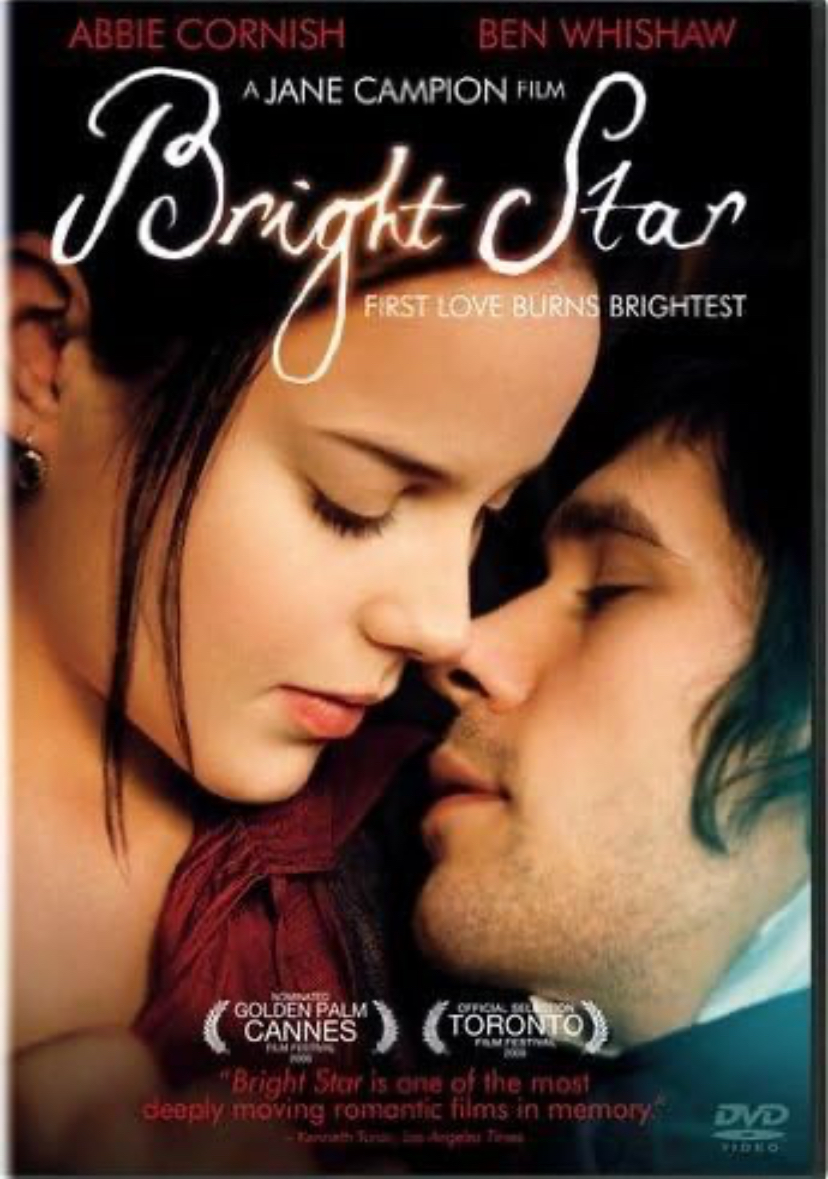
Have you seen the movie Bright Star? In the event that you haven’t, it’s about the life and love of the poet John Keats. It came out in 2009 and is based on historical people and events, obviously with a Hollywood glaze, so I am not making any apologies if I reveal a spoiler. You had time. It isn’t my fault if you haven’t sat yourself down yet to watch nearly two sad hours of a poet dying and his only love having to go on without him. We all make choices.
I have sat myself down so many times that when the darn movie stopped being free to stream I bought a DVD copy because it was going to be cheaper in the long run than renting it on Prime every time I needed to see it again. Sometimes, I watch it when I am happy because the love story is so compelling. Sometimes, I watch it when I am sad because it feels good to stop crying when the movie ends (or days later depending how sad I was going in). Sometimes I watch it because I cannot find anything else worthwhile to watch, and I really need something to distract me, to crochet to, to take me away from the horrors. Always I watch to see the crochet.
Crochet turns up in lots of movies. I think mostly it turns up in clunky, modern ways as afghans and other weird things. Boo, Bitch, the Netflix teen ghost comedy, worth watching even if you are middle aged, has some crochet that isn’t afghans, but it is, unfortunately, fast fashion-esque. These seem to be the pitfalls crochet has to surmount in movies: afghans or fast fashion. Bright Star delivers crochet excellence without an afghan in sight.
Fanny Brawne, Keats’ love, creates her own avant garde, to a point, clothing. She sews wonderful and unique garments for herself and her family. These are fun to watch, especially knowing she really did sew and avidly watch fashion. No, the garments on the screen do not represent real life, but it doesn’t matter. Brawne was a sewist, her fashion notebooks are on view at Keats House. In addition to sewing for herself, she helped Fanny Keats, John’s sister, with various fashion questions in their letters to each other. (Yes. I read their letters to each other and John’s to Fanny and everything else I could get my nosy little paws on.) What we need to understand as we watch is that she was talented. The amazing constructions on the screen demonstrate that in a language even the uninitiated can understand.
Throughout the movie, Fanny and her sister are shown sewing and embroidering. What they are never shown doing is crocheting, but crochet is present in the most glorious sweater and shrugs you will ever see. These garments are composed of the tiny, wooly motifs that signify Sophie Digard’s work. Digard is a master crochet and knit designer who makes colors dance across her work in the most delightful ways. If you don’t know her work, it’s worth googling to go see it. Go ahead. I’ll wait here.
Though the shrugs are amazing (and would be worth imitating) my favorite crocheted piece in Bright Star is the sweater Fanny wears while she sits on her bed sewing. It is stunning. There are thousands of tiny motifs brought together in a perfect sweater. It represents hours and hours of work and thought. Seeing that sweater is worth watching the whole movie for.
You might be thinking that motif sweaters are just everywhere these days and the one I mention is nothing special. I assure you, my plucky reader, you are wrong. This is the most exquisite motif sweater ever to be made!

It also appears in Emma, because, for the price I’m sure they paid, they had to get their money out of it, but I think it’s rather less successful the second time around as it looks much frumpier, though perhaps that was a character choice. I also really prefer the blue bow closure to the pink.

We are used to seeing chunky motif sweaters with no shaping and a sort of slouchy look. The Bright Star sweater floats along on a different plane of existence. It is made of tiny motifs created with gossamer yarns. It looks refined and ethereal. It is also, glorious to those of us who know, tailored. The motifs are so small it is hard to see but there are circles and squares, and the circles are different sizes. The squares are consistent over the whole sweater, leaving space for the circles to work magic. Both circles and squares have tiny little centers. Sometimes, the circles are just those centers. At other spots on the sweater, rounds are added to the circles to make them bigger, as big as the squares sometimes. This allows the maker to shape the sweater just as they please: It is easy to add a larger circle just where it is needed to create the perfect fit without disrupting the overall pattern.
The end result is gorgeous, but the construction must have been so exacting and picky. Even if you could get past weaving thousands of ends, the construction seems horrible, daunting even.
But I like daunting things. And Hannah really wants this sweater. Truth be told, that DVD belongs to her and I am going to have to get myself one someday. So I have started making motifs. I have a thousand tiny squares done, and I’m starting to make tiny circles, carefully joining them with an eye toward perfect color coordination. I am weaving my ends as I go because I am demoralized by eight ends at the end of a project, let alone thousands upon thousands. It will be a learning experience. And I like learning now that I can do it strictly on my own terms.
Wish me luck!


 Cat Mad Crochet
Leave a reply to Catherine Madjaric Cancel reply